Dear MCH Community,
This time of year always invites a certain kind of reflection. What has grown, what has taken root, and what still needs tending. It is also when we step back to share a clearer picture of where we are and where we are headed.
That reflection feels especially meaningful this year as MCH prepares to enter its 40th year as a school community. It is a chance to consider what has endured here over four decades, what continues to evolve, and what we hope to carry forward into the future. We are looking forward to celebrating that milestone together next year (more details to come later for this!).
That reflection and planning is shaped by our community. We listen closely through parent and staff surveys, our sociocracy circles, our Parent Association, and the ongoing conversations that happen throughout the year about how our systems are working in practice. We look for patterns, tensions, and direction.
Each spring, we bring all of this into a week-long strategic planning retreat. It is a chance for our leadership team to step out of the daily rhythm of school and look carefully at what we have learned from the year behind us. From there, we shape priorities for the coming year and continue building upon and implementing our strategic plan.
This letter is my attempt to reflect back to you what we have heard and what we are doing about it.
Our AMS Re-Accreditation Process
Much of this reflection and planning has been shaped by our ongoing AMS re-accreditation process. Every seven years, AMS accreditation invites schools into an intensive 18 month self-study of their programs, practices, systems, and community.
Every staff member participates in the process in some way because the goal is not a report. It’s an honest look at how the daily life of the school aligns with our mission, values, and Montessori practice.
We are now nearing completion of the first draft of our self-study, which will be submitted this October, followed by a visiting team in April 2027. More than anything, the process has been genuinely strengthening. It has pushed us to look closely at who we are as a school, where our systems are strong, where they still need to grow, and how we continue aligning our daily practices with our values and mission over time.
This year also included our first formal Equity Audit as part of that work, which gave us another important lens for reflection and growth.
As the process continues, we may still reach out for additional parent perspective and feedback. Thank you in advance for being part of that work with us.
What Is Working Well at MCH?
The heart of MCH is strong.
Again and again, families spoke about children feeling safe, known, and loved. They spoke about teachers who truly see children as individuals, classrooms where children can grow in confidence and independence, and an environment rooted in kindness, respect, and emotional safety.
One parent shared that teachers “really get to know an individual student and see them for who they are.” Another wrote that their child feels “safe, loved, and happy being himself at MCH.”
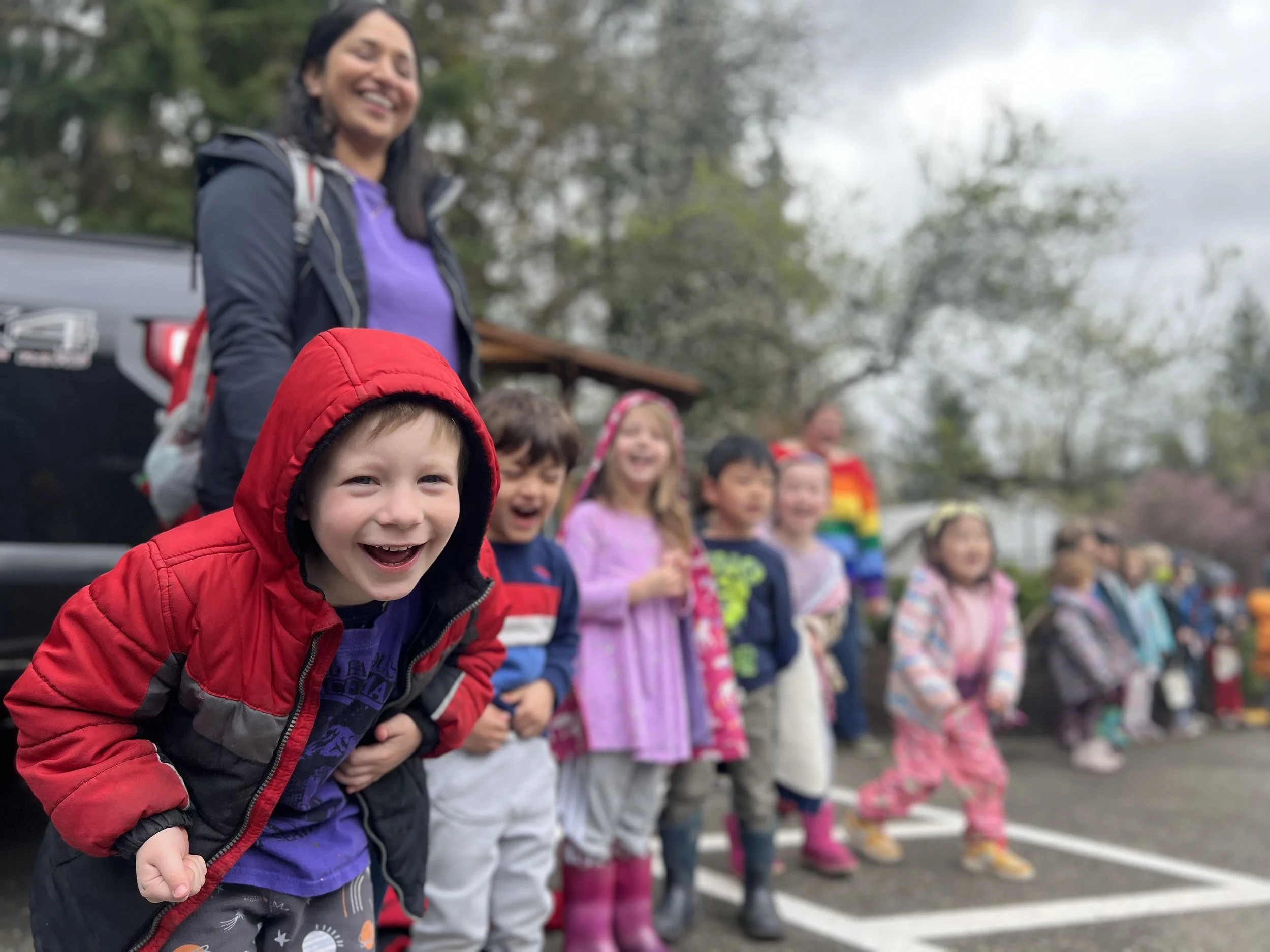
Families also spoke powerfully about the role nature plays in the life of the school. Outdoor time, the Nature Trail, animals, gardening, and the freedom to “play, grow, and get messy” were all named repeatedly as meaningful parts of their children’s experience.
Staff reflected many of these same themes, repeatedly describing the work as purposeful, values-driven, and deeply connected to the mission of the school.
One staff member wrote, “I love working at a school that truly values children as capable human beings.” Another shared, “The work feels purposeful and connected to something bigger.”
There was also a strong sense of appreciation for colleagues and for the community itself. Staff consistently described supportive relationships, meaningful collaboration, and deep care for children and families.
Where We’re Continuing to Grow
Alongside the many strengths families and staff reflected back to us, several areas for continued growth surfaced consistently across both surveys.
Communication clarity was one of them. Families and staff alike shared a desire for communication that feels more coordinated, easier to navigate, and more consistent across programs and platforms.
Greater clarity around student growth and support systems also surfaced consistently. Families want a clearer understanding of learner outcomes, developmental progression, and how support processes and transitions are navigated over time.
Staffing continuity and sustainability also surfaced as important themes. Families expressed how much consistency in teaching teams matters to their children, while staff reflected on the importance of strong systems and support structures that allow classrooms to remain stable, prepared, and grounded over time.
What stood out across both surveys was that the feedback came from a place of deep investment in the school and a shared desire to continue strengthening the experience for children and families.
What we’re holding as we make decisions
As we worked through the feedback, some natural tensions came into focus.
Clear, consistent communication with families matters. At the same time, that communication comes from teachers, and their time in the classroom is just as important.
Opportunities for families to gather and connect are meaningful. They also require time and energy from staff beyond the school day.
And Sstrong support in classrooms matters. That also means being thoughtful about what each classroom can realistically hold and where our limits are.
These are ongoing balances we have to manage thoughtfully. Our role is to hold them carefully and make decisions that reflect both what families need and what allows our teachers to do their work well. The goal is not choosing one over the other, but finding the balance that best serves children.
Our Four Priorities for the Year Ahead, and How They Live in Our Plan
At our retreat, we set four strategic priorities for the 2026–27 school year. Each of these priorities lives in a specific place in our three-year strategic plan, which guides us through our AMS re-accreditation work and beyond. I want to share both the priority and its connection to the plan, because I think it matters that you can see how your feedback directly shaped the roadmap:
The priorities below are not separate initiatives, but part of the larger strategic plan guiding MCH over the next three years. Together, they reflect our focus on strengthening communication, teacher sustainability, student support, instructional consistency, and family understanding of the Montessori journey.
1. Make communication clearer and easier to navigate. We are focusing on making communication more consistent and easier to follow across the school. This includes ensuring that families with children in multiple programs are receiving information in a more aligned way, rather than having to track down communications in different places or platforms.
We will be taking a closer look at timing, what information is shared, who is responsible for sharing it, and how it is delivered. We will also be reaching out to interested parents, including those with experience in communication, to form a small focus group so we can better understand what is working and what is not from your perspective. The goal is not to send more, but to make what we share clearer, more predictable, and easier to navigate.
2. Protect our teachers' time so they can be their best in the classroom. One of the clearest things we heard from our lead teachers was the need for more protected time to plan, prepare, collaborate, and stay grounded in the classroom experience. This year, we are taking a closer look at where that time is being interrupted throughout the day and creating clearer systems and expectations around coverage, communication, transitions, and scheduling.
Part of this work is making sure teachers are not consistently pulled away from classrooms or preparation time to fill gaps elsewhere. We are also looking at how communication practices and daily logistics can better support uninterrupted classroom time.
This work matters because the consistency, calm, and preparedness families value in Montessori classrooms depends on adults having the time and structure to sustain it well. The goal is to create systems that allow teachers to be more present, prepared, and grounded in their work with children each day.
3. Strengthen our student support systems so families experience greater clarity and consistency.
MCH has always believed deeply in meeting children where they are and creating an inclusive environment where children with different needs can thrive. That commitment is not new. What is changing is the complexity of the needs children are arriving with, and the reality that meaningful inclusion requires not only care and good intentions, but clear communication, thoughtful collaboration, strong support structures, and adults who have the time, tools, and capacity to respond well to children thoughtfully and consistently.
As a school, we are continuing to strengthen how we observe concerns, collaborate as teams, communicate with families, and support children over time. This includes creating clearer processes around student support, transitions between programs, and admissions and readiness conversations so families experience more consistency and transparency along the way.
Our goal is to make sure children receive thoughtful, responsive support while also protecting the health and stability of the classroom communities they are part of.
4.Help families better understand the Montessori journey and learner outcomes.
Many families shared that they would like a clearer understanding of what their child is learning, how growth is being observed over time, and what comes next developmentally and academically. In response, we are working toward a more consistent approach to observation, assessment, and reporting across programs.
This includes a clearer scope and sequence for academic progression, alongside a shared framework for looking at children’s growth across multiple areas of development, including social-emotional development, executive functioning, independence, self-advocacy, collaboration, and academic readiness. Rather than focusing only on isolated academic benchmarks, this approach helps us look at children’s growth more holistically and communicate more clearly about the full arc of a child’s development over time.
Our goal is for families to have a more transparent and meaningful picture of both where their child is now and how they are growing within the larger Montessori journey.
Wrapping Up and Looking Ahead Together
One theme that came through clearly in both surveys was how deeply families value the teachers at MCH. We do too.
The relationships between children and teachers are the foundation of this school. They are what create the sense of safety, trust, confidence, and belonging that families described again and again throughout the feedback. Supporting and retaining excellent teachers will always be one of our highest priorities, not only through compensation and professional growth, but through building stronger systems that allow teachers to do this work sustainably and well over time. It also means continuing to strengthen our hiring practices so we can attract and retain highly qualified educators who are deeply aligned with both Montessori practice and the values of our community.
We are also continuing to finalize staffing and program planning for the upcoming school year. As those conversations and decisions are completed, any classroom or program-specific staffing updates will be shared directly with the families connected to them later this month.
At the center of all of this is a shared commitment to children and to the kind of learning environment we want them to grow up in. One that is thoughtful, connected, grounded, and deeply human.
Thank you for being part of that work with us.
With deep gratitude,
Angela Spayde
Head of School